
A whole-home remodel can be an exciting opportunity for young families to create a space that better fits the way they actually live. As children grow, routines change, storage needs expand, and once-functional rooms may start to feel cramped or inefficient. Remodeling gives families a chance to rethink the home as a connected environment rather than a collection of separate spaces.
For young families, the most valuable improvements are often the ones that make everyday life easier. Durable finishes, better storage, comfortable gathering areas, improved outdoor spaces, and efficient home systems can all help reduce stress while making the property more enjoyable.
The best remodeling plans balance appearance with practicality. Instead of focusing only on trendy upgrades, families should think about how each room will be used over the next several years and which improvements can support changing needs.
Create a More Functional Gathering Space for Everyday Family Life

The kitchen often becomes the center of family activity, which makes it one of the most important places to address during a whole-home remodel. It is where meals are prepared, homework gets done, conversations happen, and guests naturally gather.
Thoughtful kitchen remodeling can improve both the appearance of the room and the way the entire household uses it. Young families may benefit from larger islands, additional seating, deeper drawers, pull-out storage, and dedicated pantry areas.
The layout also deserves careful attention. A kitchen with narrow walkways or poorly positioned appliances can become frustrating when several family members are using the space at the same time. Creating clearer traffic paths can make cooking, cleaning, and supervising children easier.
Families should also consider materials that are simple to maintain. Durable countertops, wipeable backsplashes, and cabinet finishes that resist fingerprints can make everyday cleanup less demanding.
A successful kitchen should feel welcoming without sacrificing function. By improving storage, circulation, and seating, families can create a room that works just as well for weekday breakfasts as it does for holidays and larger gatherings.
Design Outdoor Areas That Give Kids Room to Play and Grow
A family-friendly home should extend beyond the interior.
Outdoor areas can give children room to play while also creating additional spaces for adults to relax, entertain, and spend time together. A professional landscape designer can help families organize yards around both immediate needs and long-term use.
Young children may benefit from open lawn areas, play structures, or shaded spaces where they can spend time safely. As they grow, those same areas may be adapted for sports, gardening, or social gatherings.
Parents should also think about visibility. Positioning play spaces where they can be seen from the kitchen, patio, or living room may make supervision easier.
Pathways, fencing, drainage, lighting, and planting choices also matter. Families may want to avoid landscaping that requires excessive upkeep or includes delicate features that can easily be damaged during play.
The goal is to create an outdoor environment that feels usable rather than decorative. A well-planned yard can effectively become another living area, giving the household more room to spread out without adding square footage to the home.
Choose Comfortable Surfaces That Can Handle Busy Family Routines
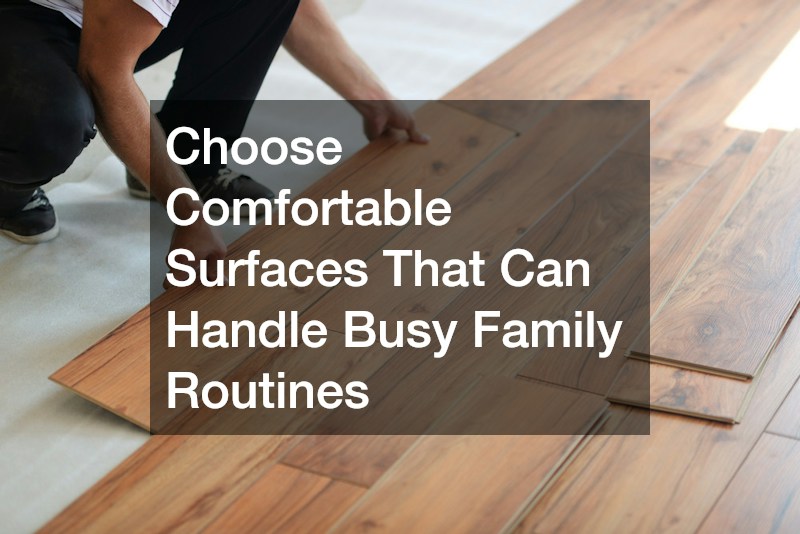
Flooring has a major influence on comfort, especially in bedrooms, playrooms, and family rooms.
Young families often spend a lot of time on the floor with children, which can make softer surfaces appealing. Visiting carpet stores can help homeowners compare different fibers, textures, stain-resistant options, and padding choices.
Modern carpet can offer warmth and noise reduction, which may be particularly useful in homes where playrooms or bedrooms are located above other living spaces.
Durability should still be a priority. Spills, toys, pet activity, and constant foot traffic can wear down flooring quickly.
Families may want to choose lower-pile or stain-resistant carpet in busy rooms while reserving softer, more luxurious options for quieter areas.
Color also matters. Extremely light carpeting may show stains more easily, while very dark shades can reveal lint and pet hair.
The most practical choice is usually one that balances comfort, maintenance, and appearance. Flooring should support how the family lives instead of requiring constant care to stay presentable.
Install Durable Materials That Stand Up to Daily Wear
Not every room is well suited for carpet, and high-traffic areas often need tougher materials.
A professional flooring company can help families compare hardwood, engineered wood, tile, laminate, and luxury vinyl for kitchens, hallways, entrances, and living spaces.
Young households tend to put floors through a lot. Shoes bring in dirt, toys get dragged across surfaces, furniture is moved, and spills happen regularly.
That makes durability one of the most important considerations in a whole-home remodel.
The best material depends on the room. Tile may work well in mudrooms and bathrooms, while engineered wood or luxury vinyl may provide the look of natural materials with easier maintenance in other spaces.
Transitions between rooms should also be planned carefully. Using too many different flooring styles can make the home feel disconnected.
Choosing a smaller number of complementary materials can create better visual flow while still allowing each room to have the right level of durability.
Improve Comfort and Efficiency With Updated Openings

Windows affect natural light, indoor temperatures, ventilation, and the overall appearance of a home.
An aging replacement window may be worth considering when existing units are difficult to open, drafty, damaged, or no longer performing well.
Young families often benefit from windows that are easy to operate and maintain. Features such as tilt-in sashes, improved locks, and more efficient glass can make everyday use more convenient.
Window placement also influences how bright a room feels. During a remodel, families may decide to enlarge certain openings or add windows where interior spaces feel dark.
Safety is another consideration. Families with small children should think carefully about window access, locking mechanisms, and furniture placement.
Updating windows can also affect surrounding finishes, so it is often best to complete this work before final painting, trim installation, and other decorative steps.
The result can be a home that feels brighter, more comfortable, and better connected to the outdoors.
Protect the Home With Reliable Exterior Maintenance
Interior upgrades are only worthwhile when the exterior is protecting the structure properly.
The roof is one of the most important parts of that protection. A qualified roofer can inspect for missing shingles, damaged flashing, leaks, or other problems that might allow water into the home.
Young families planning a major remodel should address roof concerns before investing heavily in new drywall, flooring, cabinetry, or paint.
Water intrusion can damage those improvements quickly and may lead to mold, insulation damage, or structural repairs.
Gutters and drainage systems should also be checked. Water that is not directed away from the house can create foundation or landscaping problems.
Even when a full roof replacement is not necessary, preventive maintenance can protect the larger remodeling investment.
Exterior work may not be the most exciting part of the project, but it creates the foundation for everything happening inside.
Refresh High-Traffic Rooms With Family-Friendly Finishes

Paint can completely change the feel of a room without requiring major construction.
High-traffic spaces such as hallways, kitchens, family rooms, and playrooms often develop scuffs, fingerprints, and marks more quickly than quieter areas.
A local painting contractor can help families choose finishes that stand up better to regular cleaning.
Washable paints with appropriate sheen levels can be especially useful in homes with young children. Certain finishes are easier to wipe down without leaving visible marks.
Families should also consider the condition of walls before painting. Cracks, dents, nail holes, and other imperfections should be repaired first so the final surface looks smooth.
Painting can also help connect different parts of a whole-home remodel. Using a coordinated palette throughout the property creates continuity even when individual rooms have different functions.
A fresh coat of paint can make remodeled spaces feel finished while also making older areas blend more naturally with new construction.
Handle Small Repairs Before They Turn Into Bigger Problems
Whole-home remodeling often reveals dozens of minor maintenance issues that have accumulated over time.
Loose doors, damaged trim, cracked caulk, broken hardware, squeaky hinges, and small drywall problems may not justify calling separate specialists, but they can still affect how the finished home feels.
Hiring a handyman can be an efficient way to address these smaller tasks while larger renovations are underway.
Fixing minor issues early is especially important when they have the potential to worsen. A small leak, loose railing, or damaged seal can eventually create more expensive problems.
Families can create a running repair list throughout the remodeling process and group similar tasks together.
This approach helps prevent small defects from being forgotten once the more exciting cosmetic work begins.
A remodeled home feels much more complete when both the major projects and the little details have been addressed.
Use Color to Create Warm, Welcoming Spaces for the Whole Family
Color can influence how comfortable a home feels just as much as furniture and lighting.
Professional local painters can help families create a palette that feels cohesive without making every room look identical.
Warm neutrals, soft earth tones, and muted colors can create inviting shared spaces. Children’s rooms may incorporate more personality through accent walls, furniture, or accessories that can be changed more easily as preferences evolve.
Families should also consider how natural light affects color. A shade that looks bright in one room may appear much darker in a north-facing space.
Testing samples on several walls before making a final decision can help prevent surprises.
Color can also be used strategically to define areas in open floor plans. Slight variations between a kitchen, dining area, and living room can create separation without physical walls.
The most successful palettes give the home a consistent identity while leaving room for individual spaces to feel unique.
Keep Every Room Comfortable Throughout the Year
Heating and cooling should be part of the remodeling plan from the beginning rather than treated as an afterthought.
Professional HVAC services can help determine whether existing equipment and ductwork can handle changes to the home’s layout.
Removing walls, finishing a basement, converting an attic, or adding square footage can change how air moves through the property.
Rooms that were once comfortable may become too warm or too cold if the system is not adjusted to match the renovation.
Families may also want to evaluate thermostat placement, zoning options, ventilation, and indoor air quality.
Bedrooms and nurseries should receive particular attention because consistent temperatures can affect sleep and comfort.
HVAC professionals can also help identify older equipment that may be approaching replacement age.
Coordinating heating and cooling work with framing, insulation, electrical, and drywall can make installation much easier and reduce the need to reopen finished surfaces later.
Plan Storage Around the Realities of Family Life
Young families tend to accumulate belongings quickly.
Toys, sports equipment, school supplies, seasonal clothing, strollers, and household gear can overwhelm a home without sufficient storage.
Built-in cabinets, mudroom lockers, under-stair storage, pantry systems, and closet organizers can make a major difference.
Storage should be located where items are actually used. A beautifully organized basement does little to solve clutter if shoes, backpacks, and coats pile up near the front door every afternoon.
Entry areas deserve particular attention because they often become drop zones.
Families can also use vertical space more effectively with taller shelving or wall-mounted storage.
Planning storage during the remodel allows it to feel integrated into the architecture rather than added later as an afterthought.
Create Flexible Rooms That Can Change Over Time
The needs of a young family can change quickly.
A nursery may become a child’s bedroom, a playroom may turn into a homework area, and a home office may eventually need to function as a guest room.
Designing flexible spaces can reduce the need for another major remodel several years later.
Neutral finishes, adaptable lighting, movable furniture, and generous electrical access can help rooms transition between uses.
Built-in storage can also make multi-purpose spaces more practical.
Families should avoid designing every room so specifically that it cannot easily support another function.
The more adaptable the home is, the more useful it can remain as children grow and household routines evolve.
Improve Lighting for Safety and Everyday Function
Lighting deserves more attention than it often receives during remodeling.
Families need bright task lighting in kitchens, bathrooms, homework areas, and laundry rooms, while living spaces may benefit from softer layered lighting.
Hallways, staircases, and entrances should be well illuminated to improve safety.
Night lighting can also be helpful in homes with young children who may move between bedrooms and bathrooms after dark.
Dimmer switches give families more control over atmosphere, while under-cabinet and closet lighting can improve functionality.
Whenever possible, natural light should work together with artificial lighting rather than being treated separately.
A thoughtful lighting plan can make the home easier to use throughout the entire day.
The goal is not simply to make the home look newer. It is to make the entire space easier and more enjoyable for the family to live in.
By focusing on practical improvements alongside thoughtful design, young families can create a home that feels welcoming now and remains useful for many years to come.